

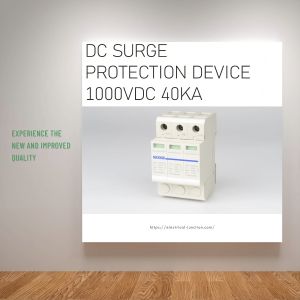

FAQs for Surge Protection Device
Q: "I have a lightning rod on my roof. Do I still need an SPD for my solar system?" A: Yes. A lightning rod (External Lightning Protection) protects your building from catching fire, but it doesn't stop the electromagnetic surge that travels through your solar cables. Without an SPD, a strike nearby can still "jump" into your wiring and fry your inverter and batteries. You need internal protection (SPD) to complement your external rod.
Q: "My inverter says it has 'built-in protection.' Is that enough for high-lightning areas?" A: Generally, no. Built-in protection in most inverters is "Level 3" or basic sacrificial fuses designed for minor grid fluctuations. In Africa's high-lightning zones, you need an external Type 2 SPD. External SPDs can handle much higher surge currents (typically 20kA to 40kA) and are much cheaper to replace than a whole inverter motherboard.
Q: "How do I know if my surge protector is still protecting my home after a storm?" A: You must check the status indicator window on the device.
-
Green: Your system is protected.
-
Red: The device has "taken the hit" to save your inverter and is now exhausted. In Africa, we recommend checking this window after every major thunderstorm. If it’s red, you can simply swap out the pluggable module without needing to rewire the entire box.
Q: "Can an SPD protect my solar pump in a remote borehole?" A: Yes, and it is highly recommended. Solar boreholes are often the highest point in a flat field, making them "lightning magnets." Installing an SPD at the pump controller is the best way to prevent your expensive submersible motor from burning out during the rainy season.
Specific Focus Questions for African Installers
1. "What is the 'kA' rating I should look for in Nigeria or South Africa?"
-
Context: Buyers often see different ratings like 20kA or 40kA.
-
Answer: For "High-Risk" regions (high lightning frequency), we recommend a Maximum Discharge Current (Imax) of at least 40kA. A lower 20kA rating might protect you once, but a 40kA device will last longer and handle more frequent "near-miss" strikes common in tropical climates.
2. "Does the SPD work if my house doesn't have a proper 'Earth' (Grounding) wire?"
-
Context: Many older buildings in African cities have poor or non-existent earthing.
-
Answer: No. An SPD is essentially a "doorway" that sends surge energy to the ground. If you don't have a solid copper earth rod driven into the soil, the surge has nowhere to go and will stay in your system. We always advise African installers to test the Earth Resistance before installing SPDs.
3. "Is it true that an SPD is required for my insurance claim to be valid?"
-
Context: Insurance companies in Africa (like Hollard or Santam) are becoming strict.
-
Answer: Yes. In many regions, if you try to claim for "lightning damage" to your solar system, the insurance company will ask for a Certificate of Compliance (CoC). If they see you didn't have a DC SPD installed, they may reject the claim due to negligence.
4. "Why should I buy a 'DC-specific' SPD instead of a cheaper AC one?"
-
Context: Some people try to use AC SPDs on the DC side to save money.
-
Answer: AC and DC power behave differently when they arc. An AC surge protector cannot extinguish a DC arc, which can lead to a fire inside your distribution box. Never use AC components on a DC solar string.