Currency


Why Your Earth Leakage Relay Keeps Tripping — Causes, Fixes and RCCB vs ELR

An earth leakage relay that keeps tripping is almost always responding to a real fault, a wiring error, or accumulated leakage across several circuits — not a faulty relay. Replacing the relay before finding the cause usually wastes a part and leaves the trip in place. This guide walks through the actual causes in the order worth checking them, explains how an ELR differs from an RCCB, and covers when each device is the right choice.
We supply Schneider Electric earth leakage protection from stock in Dubai. Call +971 4 267 6484 | WhatsApp us the model and the fault
First, Which Device Do You Actually Have?
Half of all "earth leakage relay" problems are a confusion between two different devices. They protect against the same danger but work differently, and the fix differs too.
| RCCB / RCBO | Earth Leakage Relay (ELR) | |
|---|---|---|
| What it is | A self-contained protective device that switches its own contacts | A relay plus a separate core-balance current transformer (toroid); it trips an upstream breaker or contactor |
| Sensitivity | Fixed at manufacture (e.g. 30mA, 100mA, 300mA) | Adjustable, often 30mA up to 30A across settings |
| Time delay | Instantaneous or fixed selective (S-type) | Adjustable delay, for discrimination between levels |
| Typical use | Final circuits, distribution boards, domestic and light commercial | Industrial main incomers, large panels, generators, where settings must be tuned |
| Schneider range | Acti9 iID (RCCB), Acti9 iC60 RCBO | Vigirex (RH10, RH21, RH99, RH197, RHU) |
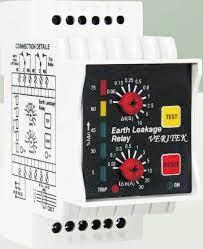
If your device is a self-contained unit on a DIN rail with its own test button and no separate ring-shaped sensor, it is an RCCB or RCBO. If there is a separate relay with a large toroid clamped around the cables, that is an ELR. For a full breakdown of the ELR range and how to select one, see our earth leakage relay selection guide.
Why It Keeps Tripping — In the Order Worth Checking
1. A genuine earth fault (check this first)
Before assuming nuisance tripping, assume the device is doing its job. A breakdown in insulation, moisture in a junction box or gland, a damaged cable, or a failing motor winding all send current to earth. The way to confirm is to disconnect loads one at a time, or megger-test each circuit's insulation resistance to earth. If one circuit reads low, you have found a real fault, and the relay just saved you from something worse.
2. Cumulative leakage across too many circuits
This is the most common cause of genuine nuisance tripping on a 30mA device. Every load leaks a small standing current to earth — VFDs, IT equipment, long cable runs, EMC filters, fluorescent and LED drivers all contribute a few milliamps each. Individually harmless; added together on one protective device, they can approach the trip threshold, so a small extra leak tips it over.
The fix is to split the load across multiple devices, or on an industrial panel, to use an ELR with an adjustable higher threshold and a short time delay rather than a fixed 30mA device on the whole board.
3. A shared or borrowed neutral
If a circuit's neutral is connected downstream of the protective device but its live is not, or two circuits share a neutral, the device sees an imbalance that looks exactly like leakage. This is a wiring error, not a fault in the load, and it is common after a board has been modified. Every live and its own neutral must pass through the same device, or the same toroid.
4. The neutral touching earth after the device
A neutral-to-earth contact anywhere downstream — a neutral bar bonded by mistake, or a nick in insulation letting neutral touch the enclosure — creates a parallel path and an imbalance the device reads as leakage. This one is easy to miss because it trips under load rather than at switch-on.
5. Wrong sensitivity or no time delay for the application
A 30mA device on an industrial incomer feeding dozens of circuits will trip on cumulative leakage alone. On an ELR, this is a setting problem: the threshold is too low or there is no delay to allow downstream devices to clear first. On a fixed RCCB, it means the wrong device was fitted for the position, and it needs replacing with a higher-rated or S-type unit, or the load needs subdividing.
6. The toroid, on an ELR specifically
An ELR depends on its core-balance CT. If the toroid is cracked, if the cables are not centred within it, if the earth conductor was accidentally passed through it, or if the toroid-to-relay cable is damaged or too long, the relay misreads and trips. Schneider limits that connecting cable length for a reason. Re-seat the cables centrally, keep the earth conductor outside the toroid, and check the sensor cable.
How to Diagnose It Methodically
- Trips immediately, even with all loads off: wiring fault — a neutral-earth contact, a borrowed neutral, or on an ELR a toroid or sensor-cable fault.
- Trips only when a specific load runs: that load has an earth fault, or contributes enough leakage to tip an already-loaded device. Isolate it and test it.
- Trips randomly under general load: cumulative leakage. Split the circuits or move to an adjustable ELR with a suitable threshold.
- Trips in wet weather or early morning: moisture ingress somewhere — outdoor glands, junction boxes, or condensation in a panel.
Work from the supply down, disconnecting or isolating in sections. The point at which the trip stops tells you which section holds the fault.
Choosing the Right Device So It Stops Happening
Most repeat-tripping problems trace back to the wrong device in the wrong position. A quick guide:
- Final circuit, personnel protection: 30mA RCCB or RCBO. An RCBO combines overcurrent and earth-leakage protection in one module, which suits tight boards.
- Distribution board incomer: 100mA or 300mA S-type (time-delayed) RCCB, so final-circuit devices trip first and one fault does not take out the whole board.
- Industrial main incomer or generator: an ELR such as the Schneider Vigirex range with adjustable threshold and delay, so you can set discrimination across the installation.
- Fire protection on a large feeder: a higher-threshold ELR set to detect insulation breakdown before it becomes a fire risk, rather than for personnel protection.
The governing standards are IEC/EN 61008-1 for RCCBs, IEC/EN 61009-1 for RCBOs, and IEC/EN 60947-2 Annex B for ELRs used with circuit breakers. In the UAE these fall under the relevant conformity requirements, so specify certified devices for any installation subject to inspection.
Getting the Right Part
We stock Schneider Acti9 iID RCCBs, Acti9 RCBOs, and the Schneider Vigirex ELR range with matching toroids, at our counter in Naif, Deira. If you are replacing a tripping device, the important thing is to replace it with the correct sensitivity and type for its position, not simply the same model — because if the original was wrong for the job, an identical replacement will trip too.
Tell us the position (final circuit, incomer, industrial main), the load type, and the existing part number if you have it, and we will confirm the right device. Send a photo of the existing unit and its rating plate and we can identify it and recommend the replacement.
Frequently Asked Questions
Why does my earth leakage relay keep tripping with no obvious fault?
The most common cause is cumulative leakage. Every connected load leaks a small current to earth, and on a 30mA device the combined total across many circuits can approach the trip threshold. The fix is to split the load across multiple devices or, on an industrial panel, use an adjustable earth leakage relay with a higher threshold and short time delay rather than a single fixed-sensitivity device on the whole board.
What is the difference between an RCCB and an earth leakage relay?
An RCCB is a self-contained device with fixed sensitivity that switches its own contacts, suited to final circuits and distribution boards. An earth leakage relay is a separate relay used with a core-balance toroid and adjustable sensitivity and time delay, suited to industrial main incomers where settings need tuning for discrimination. The relay does not switch the load directly; it trips an upstream breaker or contactor.
Can I fix nuisance tripping by fitting a higher-rated device?
Sometimes, but only after confirming there is no genuine earth fault. If the tripping is caused by cumulative leakage across many circuits, moving to a higher threshold or subdividing the load is the correct fix. If it is caused by an actual insulation fault or wiring error, raising the threshold hides a real danger and must not be done. Always confirm the cause first with insulation testing.
Why does my RCCB trip only when it rains?
Weather-related tripping points to moisture ingress. Water in an outdoor cable gland, junction box, or light fitting creates a leakage path to earth that appears only when it is wet. Trace the affected circuit and check outdoor terminations and glands rather than replacing the RCCB.
Does a VFD cause earth leakage tripping?
Yes, commonly. Variable frequency drives have EMC filters that leak a standing current to earth by design, and long motor cables add to it. This leakage can trip a standard 30mA RCCB. Use a drive-rated or type-B residual current device, or protect the drive circuit with a higher-threshold earth leakage relay sized for the leakage.
What Schneider earth leakage relay should I use for an industrial panel?
The Schneider Vigirex range is designed for this. RH10, RH21 and RH99 provide adjustable residual-current protection with matching toroids, and RH197 and RHU add monitoring functions. Sensitivity is adjustable across a wide range with selectable time delays, which lets you set discrimination between the incomer and downstream devices. Contact us with your panel details for the correct model and toroid size.
Talk to Us
If a device is tripping and you are not sure why, send us a photo of it and describe when it trips. We can usually tell you whether it is the device, the wiring, or a real fault, and supply the correct replacement if you need one.
Call +971 4 267 6484 | WhatsApp us | Counter: Al Jamal Building 01, Shop 07, 12A Street, Naif, Deira, Dubai
July 24, 2026
|
View: 2803
|
Categories: Electrical Junction | Expert Electrical Engineering Blog
|
Tags: electric shop, electric shop in dubai, electric shop in abudhabi, electric distributor, Schneider Electric Dubai
|
By: Mohammad Afzal Siddiqui
About the Author

Related Posts
How Schneider Electric is Powering a Greener Future in Abu Dhabi
October 28, 2023| Posted in Electrical Distributor | Mohammad Afzal Siddiqui| 248



Counterfeit Schneider and ABB MCCBs
August 8, 2026