Currency


Schneider ComPacT NSX MCCB: The Panel Builder's Selection Guide

The Schneider ComPacT NSX is a molded case circuit breaker (MCCB) range that protects distribution circuits up to 630 A, built around one defining feature: interchangeable trip units. The same breaker body accepts either a fixed thermal-magnetic (TM-D) module or an adjustable electronic Micrologic module, so you can match protection to the application, and upgrade it years later, without changing the breaker. This guide covers frame ratings, breaking-capacity classes, trip-unit choice, the Vigi earth-leakage module, and how NSX differs from the larger ComPacT NS range, so you spec the right part the first time.
ComPacT NSX Frame Ratings at a Glance
The range is built on frame ratings from 100 A to 630 A. The compact NSXm sub-range covers the smallest sizes up to 160 A. All frames are available in 3-pole (3P) and 4-pole (4P) versions and comply with IEC 60947-2.
- NSX100 - up to 100 A
- NSX160 - up to 160 A
- NSX250 - up to 250 A
- NSX400 - up to 400 A
- NSX630 - up to 630 A
Above 630 A you move out of the NSX range and into ComPacT NS, which protects lines up to 3200 A. More on that distinction below.
Breaking Capacity: What F, N, H, S and L Mean
The letter after the frame rating is the performance (breaking-capacity) class. It sets the ultimate breaking capacity (Icu) the breaker can safely interrupt. You choose the class from the prospective short-circuit current at the point of installation, not from the load current. The values below are typical Icu at 415 V AC and vary with system voltage, so always confirm against the specific frame datasheet.
| Class | Typical Icu at 415 V AC | Typical use |
|---|---|---|
| F | 36 kA | Standard commercial distribution |
| N | 50 kA | General industrial distribution |
| H | 70 kA | Higher fault-level installations |
| S | 100 kA | Heavy industrial, close to transformers |
| L | 150 kA | Very high fault-level main distribution |
Selecting too low a class is a safety fault, not just a spec mismatch. If the Icu is below the prospective fault current, the breaker cannot be guaranteed to clear a short circuit safely. When in doubt, verify the fault level with the design engineer before ordering.
Thermal-Magnetic (TM-D) vs Micrologic Trip Units
The trip unit is where most NSX buying decisions are actually made. There are two families.
Thermal-Magnetic (TM-D / TM-G)
TM-D is the standard thermal-magnetic trip unit for everyday distribution. It gives reliable overload and short-circuit protection at a lower cost, with limited adjustment. TM-G is a low-magnetic variant suited to generator circuits and long cable runs where inrush and low fault currents need a lower magnetic threshold.
Micrologic (Electronic)
Micrologic electronic trip units add adjustable settings, tighter discrimination, and, on higher versions, metering. Choose the version by the protection letters you need:
- Micrologic 2 (LI) - long-time (overload) plus instantaneous (short-circuit). The electronic equivalent of a basic distribution trip unit.
- Micrologic 5 (LSI) - adds an adjustable short-time delay for selectivity between upstream and downstream breakers.
- Micrologic 6 (LSIG) - adds integrated earth-fault (ground-fault) protection.
- Micrologic 7 - adds earth-leakage (residual current) protection.
Dedicated motor-protection versions (for example Micrologic 2.2 M and 6.2 M) are available for protecting motor feeders. The key commercial advantage of the whole system: because the trip unit is field-swappable, a site can upgrade from a basic TM-D to a metering-capable Micrologic later without replacing the breaker body.
Adding Earth-Leakage Protection: The Vigi Module
The Vigi module is a bolt-on residual-current unit that mounts to the base of an NSX breaker and adds earth-leakage detection independent of the trip unit. It is the practical way to get RCD-class earth-leakage sensitivity on a breaker fitted with a Micrologic 2 (LI-only) or a TM-D trip unit that has no ground-fault function of its own. Sensitivities are adjustable, and Vigi versions exist for each frame size.
ComPacT NSX vs ComPacT NS: Which Range Do You Need?
This is the single most common mix-up when buyers read a bill of quantities. They are two different ranges:
- ComPacT NSX - MCCBs up to 630 A, with interchangeable TM-D or Micrologic trip units. Used for outgoing feeders, sub-distribution and smaller main incomers.
- ComPacT NS - larger MCCBs up to 3200 A, typically for main incomers and large distribution boards.
If your feeder is 630 A or below, you are almost always looking at NSX. Above that, you specify NS. For a broader walk-through of where MCBs, MCCBs and ACBs each belong, see our circuit breaker selection guide.
Can You Order an NSX Frame Without a Trip Unit?
Yes - and this catches out buyers who assume every breaker ships ready to run. NSX basic frames (for example the NSX400F) are sold without a trip unit, so you add the matching TM-D or Micrologic module separately. This is deliberate: it lets panel builders stock one frame and fit the exact trip unit a job needs. When you order a basic frame, confirm you are also ordering a compatible trip unit of the correct rating, or the breaker arrives non-operational. If you would rather order the complete, ready-to-fit breaker, choose a version listed with its trip unit already specified.
Buying Genuine ComPacT NSX in the UAE and for Export
MCCBs are among the most counterfeited electrical components in the market, and a fake NSX puts a whole board at risk because its stated breaking capacity cannot be trusted. Electrical Junction supplies genuine Schneider Electric ComPacT NSX from Dubai stock, with technical queries handled by an engineer rather than a call-centre queue, which matters when a buyer needs the right frame, class and trip-unit combination confirmed before dispatch. Ready stock in Dubai also shortens lead times for buyers across the GCC and for export projects in markets such as Iraq, Kenya and Nigeria.
Browse the full range on the MCCB circuit breaker category, or go straight to common configurations: the NSX100N 50 kA TM-D 100 A 3P, the NSX250F Micrologic 2.2 250 A, the NSX400F basic frame, or a standalone Micrologic 2.2 trip unit.
Frequently Asked Questions
What is the difference between the ComPacT NSX and ComPacT NS? The ComPacT NSX is an MCCB range for circuits up to 630 A with interchangeable TM-D or Micrologic trip units, while the ComPacT NS is a larger range for circuits up to 3200 A. If your feeder is 630 A or below you specify NSX, and above 630 A you specify NS.
What do the F, N, H, S and L classes mean on an NSX breaker? They are breaking-capacity classes that set the ultimate breaking capacity (Icu). Typical values at 415 V AC are F 36 kA, N 50 kA, H 70 kA, S 100 kA and L 150 kA. You choose the class from the prospective short-circuit current at the installation point.
Should I choose a TM-D or a Micrologic trip unit? Choose a TM-D thermal-magnetic trip unit for standard distribution at lower cost with limited adjustment. Choose a Micrologic electronic trip unit when you need adjustable settings, selectivity, earth-fault protection or metering.
What is the difference between Micrologic 2, 5, 6 and 7? Micrologic 2 provides overload and short-circuit protection (LI). Micrologic 5 adds an adjustable short-time delay for selectivity (LSI). Micrologic 6 adds earth-fault protection (LSIG). Micrologic 7 adds earth-leakage (residual current) protection.
Can I order an NSX frame without a trip unit? Yes. NSX basic frames such as the NSX400F are sold without a trip unit, and you add a compatible TM-D or Micrologic module separately. Confirm you order the matching trip unit of the correct rating, or the breaker will arrive non-operational.
How do I add earth-leakage protection to an NSX? Fit a Vigi add-on module to the base of the breaker. It provides adjustable earth-leakage (residual current) detection independent of the trip unit, which is useful on a breaker with a TM-D or Micrologic 2 trip unit that has no ground-fault function of its own.
August 8, 2026
|
View: 54
|
Categories: Moulded Case Circuit Breakers
|
Tags: electric distributor, Circuit Breakers, Schneider Electric Dubai
|
By: Mohammad Afzal Siddiqui
About the Author

Related Posts
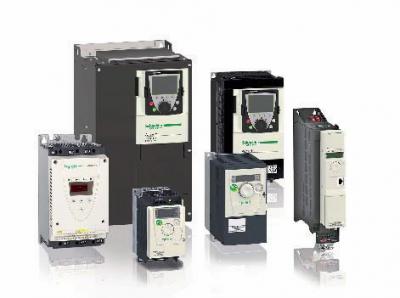

Schneider Electric Dubai: Sustainable Energy & Industrial Switchgear Solutions
May 22, 2023| Posted in Electrical Distributor | Mohammad Afzal Siddiqui| 489

How does VFD work?
May 25, 2023| Posted in Electrical Distributor | Mohammad Afzal Siddiqui| 475
Stay Connected: How to Choose the Perfect Electrical Shop in Sharjah for Your Needs
June 15, 2023| Posted in Electrical Distributor | Mohammad Afzal Siddiqui| 267
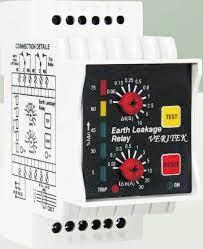



Counterfeit Schneider and ABB MCCBs
August 8, 2026