Currency


Water Pump Control Panels: Complete Buyer's Guide for Facility Managers and Contractors in UAE and Saudi Arabia

By Mohammad Afzal Siddiqui | Published: November 2023 | Last Updated: June 2026
Whether you manage a residential tower in Dubai, a commercial complex in Riyadh, or an industrial facility in Abu Dhabi — your water pump control panel is one of the most critical pieces of electrical infrastructure in the building. When it fails, water supply stops. When it trips repeatedly, your maintenance team wastes hours. When it is not DEWA or SEC compliant, your project fails inspection.
This guide is written for facility managers, MEP contractors, and building owners — not panel builders. It covers what types of pump panels exist, how to identify when yours needs upgrading, what DEWA and SEC require, and how to source replacement components or a complete new panel from Electrical Junction in Dubai.
Types of Water Pump Control Panels
Understanding which type of pump panel you have — or need to specify — is the first step. These are the most common types across UAE and Saudi Arabia:
| Panel Type | Application | Typical Locations in UAE/KSA |
|---|---|---|
| Water Transfer Set Panel | Transfers water from underground tank to roof tank | Residential towers, hotels, schools |
| Booster Pump Panel | Maintains water pressure in high-rise buildings | Towers above 10 floors, hospitals, malls |
| Sewage Lifting Station Panel | Removes sewage from below-grade levels | Basements, underground car parks, villas |
| Irrigation Pump Panel | Controls irrigation pump for landscaping | Hotels, golf courses, farms, Saudi agricultural sites |
| Firefighting Pump Panel | Dedicated panel for fire suppression pumps | All commercial and industrial buildings (mandatory) |
| Chilled Water Pump Panel | Controls HVAC chilled water circulation pumps | District cooling, large commercial buildings |
How a Water Pump Control Panel Works
A water pump control panel has three core jobs:
- Start and stop the pump — either manually (push buttons) or automatically (float switch, pressure switch, or level sensor)
- Protect the motor — against overload (overheating), short circuit, single-phasing, and earth leakage
- Indicate status — run, fault, and power available lamps so your maintenance team can see the pump status at a glance
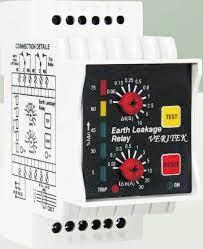
The panel contains a circuit breaker for short-circuit protection, a contactor for switching the motor, an overload relay for thermal protection, and an earth leakage relay (ELR) for earth fault protection — all wired together in a metal enclosure rated for the installation environment.
7 Signs Your Water Pump Control Panel Needs Upgrading
These are the warning signs that your existing pump panel is failing or non-compliant — and should be replaced or upgraded before it causes a building water outage or fails a DEWA/SEC inspection:
- Overload relay trips repeatedly — if the overload trips more than once a week without a clear mechanical cause, the overload setting is wrong, the relay is worn, or the motor is degrading. Do not simply increase the overload setting — investigate the cause
- Panel is more than 15 years old — contactors and overload relays have a mechanical life of 1–3 million operations. High-cycling pump panels can exhaust this life within 10–15 years
- No earth leakage protection — panels built before 2010 in the UAE often lack ELR protection. DEWA now requires earth leakage protection on all pump circuits in wet locations. This is a compliance failure
- Contactors are burnt or pitting visible
November 18, 2023
|
View: 1501
|
Categories: Electrical Distributor
|
Tags: Electrical control panels, water pumps, Schneider Electric Dubai
|
By: Mohammad Afzal Siddiqui
About the Author

Related Posts

Electrical Shop Dubai — Schneider, ABB and Lovato Switchgear from Our Deira Counter
July 24, 2026| Posted in Electrical Distributor | Mohammad Afzal Siddiqui| 2710

The Middle East Electricity Exhibition
March 4, 2023| Posted in Electrical Junction | Expert Electrical Engineering Blog| Mohammad Afzal Siddiqui| 370


Best Price Ceiling Fans in Dubai — Sameer and BLDC Fans Available from Electrical Junction
March 25, 2023| Posted in Electrical Distributor | Mohammad Afzal Siddiqui| 1611



Counterfeit Schneider and ABB MCCBs
August 8, 2026